
Tevpro insights
The 7 AI Transformation Priorities for Enterprise Leaders
The seven AI transformation priorities businesses are working through now—from finding ROI and automating workflows to modernizing systems, securing AI, and building trustworthy data foundations.
Enterprise leaders are no longer asking whether AI matters. They are asking where it can create measurable value, which processes should change first, whether their data and technology are ready, and how to move from experimentation to production without creating an expensive science project.
Successful AI transformation is rarely about choosing the best large language model (LLM) or deploying another tool. The harder work involves business processes, data, architecture, security, governance, and integration with the systems where work happens.
For Enterprise Leaders moving from experimentation to adoption, seven priorities consistently rise to the top:
- AI diagnostics and ROI planning
- Agentic workflow automation
- Architecture and software development life cycle (SDLC) assessment
- AI application security testing
- AI security, privacy, and compliance
- Legacy application and code modernization
- Data engineering and enterprise knowledge systems
Together, these priorities provide a practical framework for turning AI pilots into measurable business capability.
1. AI Diagnostic and ROI Planning
The first question is not “Where can we use AI?” It is “Where should we use AI first?”
An AI diagnostic turns broad interest into a prioritized investment plan. It identifies potential use cases, evaluates business value and technical feasibility, and determines which opportunities deserve investment.
Start with work that is repetitive, slow, expensive, error-prone, manual, or dependent on a few specialists. Then assess whether AI can improve it and whether the organization has the necessary data, system access, process maturity, and operational capacity.
What Should an AI Diagnostic Deliver?
A useful diagnostic should produce:
- A prioritized portfolio of AI use cases tied to measurable outcomes
- Estimated value, effort, risk, and time to impact
- Data, integration, security, and technology requirements
- Baseline metrics for measuring improvement
- A practical 90-day roadmap
- One or two opportunities capable of proving value
The common mistake is choosing the most impressive demonstration instead of the business problem with the strongest combination of value and feasibility.
If nobody can describe current volume, cycle time, labor, quality, error rate, or cost, projected AI ROI remains a hypothesis.
Start with the business outcome. Then determine whether AI is the right tool.
2. Agentic AI and Workflow Automation
Businesses increasingly want AI to participate in real workflows—not just generate text. AI systems can retrieve information, interpret documents, use tools, call APIs, update systems, route exceptions, and notify people.
An effective AI agent is not an unconstrained “digital employee.” It is an engineered system with a defined objective, approved tools, controlled permissions, validation rules, and escalation paths.
Good early opportunities include:
- Document intake, extraction, and classification
- Customer-service triage and follow-up
- Internal request routing
- Quote and proposal preparation
- Financial and operational reporting
- Enterprise knowledge retrieval
- Data reconciliation
- Compliance review
- Repetitive administrative workflows
The key question is not simply what can the agent do? It is what should the agent be allowed to do autonomously?
Agents can handle structured, reversible, lower-risk actions with greater autonomy. Human approval should remain around sensitive data, financial transactions, external commitments, policy exceptions, destructive actions, and decisions requiring accountable judgment.
A little restraint is cheaper than an incident report.
3. AI-Ready Architecture and SDLC Assessment
AI is changing software development, but it has not repealed the laws of software engineering.
Weak codebases, poor documentation, unclear service boundaries, missing tests, inconsistent environments, and undocumented dependencies limit both human engineers and AI coding agents.
An AI-ready architecture and SDLC assessment evaluates whether the engineering environment can safely benefit from AI-assisted development.
It may examine:
- Application architecture and service boundaries
- Technical debt
- Test coverage
- CI/CD pipelines
- Development environments
- Documentation
- APIs and integration patterns
- Code quality and maintainability
- Observability and monitoring
- Developer access controls
- AI coding tools and practices
- Security and governance for AI-generated code
The output should be a modernization roadmap—not just an AI maturity score. Leadership needs to know which constraints slow delivery, which risks are acceptable, and where targeted investment could improve productivity.
AI can generate code quickly. Production-ready software still requires architecture, validation, security, testing, integration, and experienced engineering judgment.
4. AI Application Security Testing and Hardening
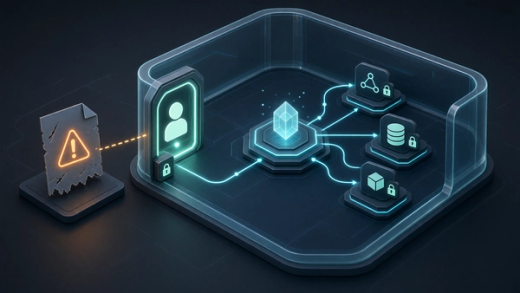
AI applications introduce risks that traditional testing may not address. An application can have strong authentication and still be vulnerable to prompt injection, untrusted documents, excessive permissions, unsafe tool calls, or data exposure.
AI security testing should evaluate:
- Direct and indirect prompt injection
- Sensitive data leakage
- Excessive agent permissions
- Insecure tool and API access
- Unsafe output handling
- Manipulation through retrieved content
- Unauthorized actions
- Cross-user or cross-tenant data exposure
- Inadequate logging and traceability
- Abuse of connected AI agents
The goal is not to declare a model safe. It is to make the entire AI-enabled system resilient.
That requires least-privilege access, separation of trusted and untrusted inputs, constrained tools, output validation, approval for high-risk actions, agent logging, adversarial testing, and remediation before production.
As AI systems take actions rather than simply generate answers, these controls become essential.
5. AI Security, Privacy, and Compliance Assessment
Before scaling AI, leadership should be able to answer:
What information can this system see, retain, send, generate, and act on?
An AI security, privacy, and compliance assessment answers that question by examining actual data flows and system behavior.
It should consider:
- Data classification
- Personally identifiable and sensitive information
- Model and AI vendor selection
- Data retention
- Access controls
- Regional data requirements
- Auditability
- Intellectual property
- Human oversight
- Third-party integrations
- Contractual obligations
- Applicable industry and regulatory requirements
Risk should also be proportional to the use case.
An internal AI assistant helping employees find approved documentation does not necessarily require the same controls as an AI system making decisions that materially affect customers, employees, financial transactions, or regulated activities.
Good AI governance makes safe adoption easier.
Organizations need approved technology patterns, clear review thresholds, defined ownership, and a practical path for moving AI projects from experimentation into production.
A 40-page AI policy nobody understands is mostly an expensive PDF.
6. Legacy Application and Code Modernization
Legacy technology is no longer just an IT maintenance problem. It can become a direct constraint on AI transformation.
AI agents and AI-assisted development tools work best when software has understandable boundaries, accessible interfaces, automated testing, useful documentation, and predictable deployment processes.
A brittle monolith with sparse tests, unsupported technology, inaccessible data, and tribal-knowledge dependencies is difficult for a new engineer to understand—and equally difficult for an AI coding system to modify safely.
Modernization does not mean rewriting everything.
For many organizations, the highest-return strategy is to identify the parts of the technology estate creating the greatest operational drag, including:
- Unsupported frameworks
- Fragile integrations
- Inaccessible data
- Manual deployment processes
- Missing automated tests
- Unstable interfaces
- Poor observability
- Tightly coupled systems
- Applications where small changes create disproportionate risk
AI-assisted software development can also change the economics of modernization. Experienced engineers can use modern AI development tools to analyze code, accelerate repetitive development work, generate tests, assist documentation, and speed portions of migration and refactoring.
The objective remains the same: create clearer system boundaries, better observability, stronger automated testing, safer deployment, and APIs that allow new capabilities—including AI—to interact reliably with existing business systems.
7. Data Engineering and Enterprise Knowledge Systems
AI is only useful when it can reliably access the information required to perform its job.
Most enterprises already possess enormous amounts of valuable information. The problem is that it may be scattered across ERP and CRM platforms, databases, shared drives, emails, spreadsheets, data warehouses, PDFs, legacy applications, and the heads of employees who know where the bodies are buried.
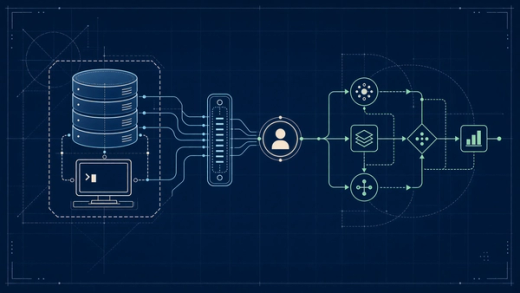
AI-ready data engineering creates trustworthy paths between that information and the AI systems that need it.
Depending on the use case, that may include:
- Data pipelines
- API integrations
- Data migrations
- Document ingestion and processing
- Enterprise search
- Retrieval-augmented generation (RAG)
- Vector and semantic search
- Metadata management
- Permissions-aware knowledge bases
- Master data management
- Data quality monitoring
- Real-time system integrations
The key word is trustworthy.
An AI system needs more than access to information. It needs the right information, with the appropriate permissions, at the appropriate time, and with enough context to use it correctly.
A fast AI answer based on stale, incomplete, or unauthorized data is not a productivity improvement.
It is simply a faster way to make the wrong decision with confidence.
How Should a Business Start an AI Transformation?
These seven priorities are connected, but organizations should not attempt to tackle all of them simultaneously.
For many businesses, a practical AI transformation sequence looks like this:
Assess → Prioritize → Prepare → Build → Validate → Measure → Scale
1. Assess
Identify operational problems, existing technology constraints, available data, and organizational readiness.
2. Prioritize
Rank potential AI initiatives based on business value, feasibility, risk, and time to impact.
3. Prepare
Establish the data access, integrations, security controls, architecture, and governance required by the selected use case.
4. Build
Develop a focused AI-enabled workflow designed around a measurable business outcome.
5. Validate
Test accuracy, security, reliability, permissions, exception handling, and human oversight under real operating conditions.
6. Measure
Compare the new workflow against the original baseline using metrics such as cycle time, cost, quality, throughput, error rates, or employee effort.
7. Scale
Use what worked to establish reusable architecture, governance, integration patterns, and development practices for subsequent AI initiatives.
This approach creates proof before scale.
Leadership gets a measurable ROI signal as the engineering establishes a working production pattern. Employees gain experience using AI inside an actual workflow and the organization learns what needs to change before making larger investments.
From AI Experimentation to Production
The organizations gaining meaningful traction with AI are treating it as an operating transformation, not a technology procurement event.
They begin with a business problem worth solving. They establish a measurable baseline. They prepare the data and systems underneath the workflow. They put appropriate security and governance around it. Then they determine whether the resulting process actually performs better.
The question is no longer whether AI belongs in the business.
The more useful question is:
Which business problem is worth solving first—and can you turn that first win into a repeatable competitive advantage?
Tevpro helps organizations move AI from experimentation into production by combining AI engineering, advanced software development, enterprise integration, data engineering, security, and legacy modernization. We identify high-value opportunities, build AI-enabled workflows inside existing business systems, and engineer the architecture required to make them reliable in the real world.
Ready to move from AI ideas to measurable business outcomes? Talk to Tevpro about building your AI roadmap and first production workflow.
Why work with us
Why Tevpro?
Whether you’re a startup with a bold product idea or an established company seeking a stronger delivery partner, Tevpro delivers results. Our expert consultants specialize in building secure, scalable applications that simplify operations and drive real ROI.
FAQ
Frequently Asked Questions About AI Transformation
AI transformation is the process of integrating artificial intelligence into an organization's operations, technology, data, and decision-making to produce measurable business improvements. It typically involves more than adopting AI tools; it requires changes to workflows, software architecture, data access, governance, security, and how work is performed.